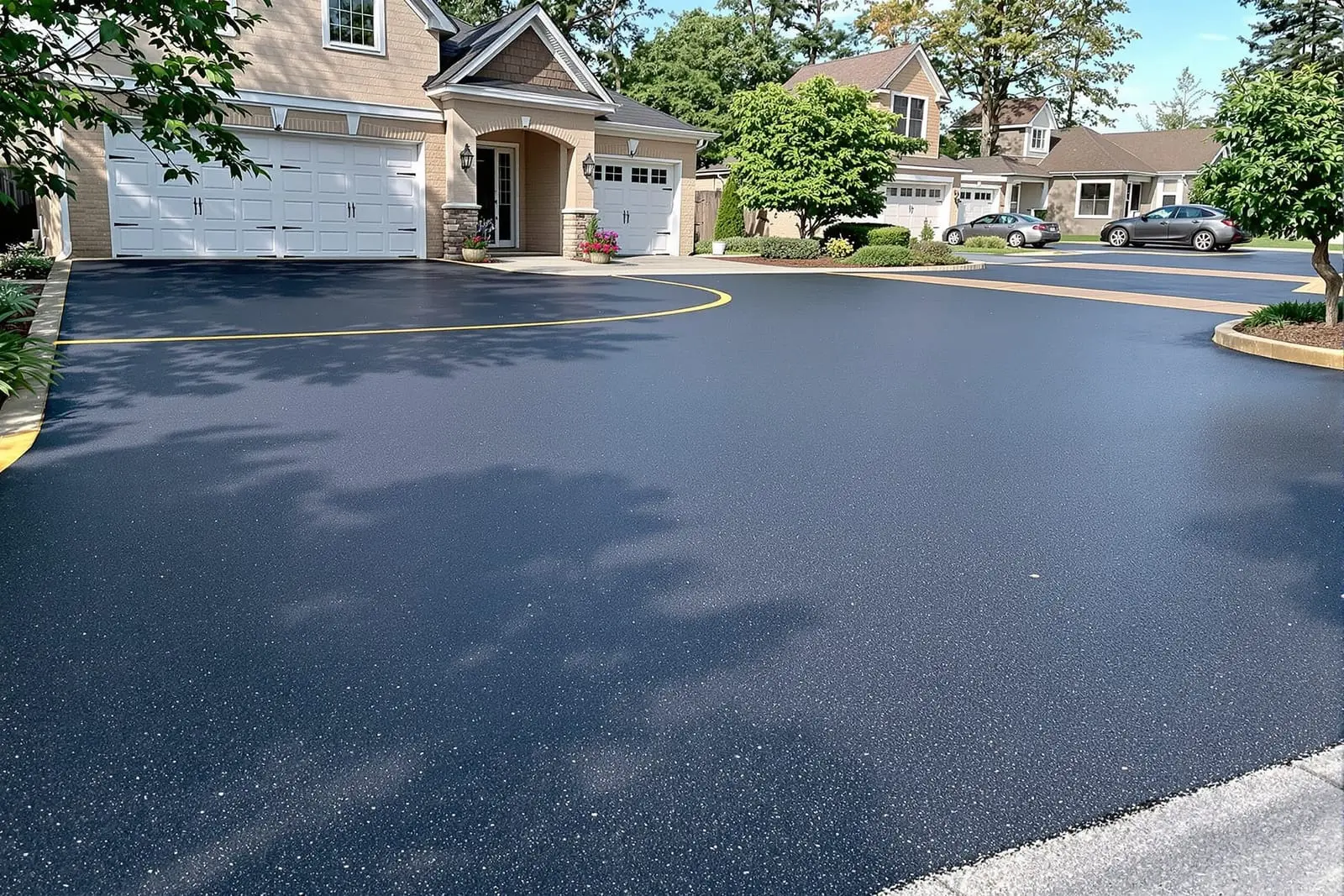
Extend the life of your existing pavement with commercial asphalt resurfacing in Baton Rouge, LA. We evaluate your parking lot or access road, repair structural issues, and then apply a smooth overlay that refreshes appearance and performance. This cost effective option can delay full reconstruction while giving customers a better driving and parking experience.
Prestige Asphalt Baton Rouge provides professional commercial asphalt resurfacing throughout Baton Rouge, LA and the surrounding area. Our licensed, insured crew delivers safe, clean, on-time work with a free estimate before anything begins. Call (225) 433-0465 or request your free quote.
Commercial Asphalt Resurfacing for Baton Rouge Properties
Prestige Asphalt Baton Rouge provides commercial asphalt resurfacing and overlay services built around the specific conditions of Baton Rouge traffic, soil, and weather. Instead of pushing full tear-outs when they are not needed, we evaluate whether your existing asphalt base can be preserved and renewed with a structurally sound overlay. This approach can restore appearance and performance for shopping centers, office parks, industrial sites, medical facilities, and churches while controlling downtime and cost.
Commercial asphalt resurfacing is ideal when the surface shows cracking, raveling, rutting, or ponding, but the underlying base has not failed. Our crew performs a detailed site assessment that includes core sampling where appropriate, drainage checks, and traffic pattern review. If your lot or private road qualifies, we mill or level the existing surface, correct localized failures, then apply a new asphalt layer that performs like a new pavement system at a fraction of the cost of reconstruction.
Local familiarity matters in Baton Rouge because our heat, sudden thunderstorms, and heavy service vehicle traffic combine to stress pavements differently than in cooler or drier regions. Prestige Asphalt Baton Rouge specifies mix designs, overlay thickness, and joint details with these exact conditions in mind so your resurfaced pavement resists rutting in summer and remains smooth despite frequent rain events.
How Commercial Asphalt Resurfacing & Overlays Are Performed
A successful commercial overlay follows a defined sequence, not just a new layer of blacktop on top of old problems. Prestige Asphalt Baton Rouge starts with a preconstruction walk-through with your facility or property manager to document existing defects, traffic flow, and operational constraints. We identify high load zones such as dumpster pads, delivery routes, and fire lanes that may need thicker overlays or localized base repair.
Preparation is the most important phase. First we power sweep and mechanically clean the pavement so the new asphalt can bond properly. Oil spots are treated or removed, loose aggregate is cleared, and vegetation along edges is cut back. Where the existing surface is distorted or too high for door thresholds and drains, we use a milling machine to remove a controlled depth of asphalt, often 1 to 2 inches, to create a stable, textured surface for the new layer and to maintain correct elevations.
Next, structural repairs are handled before any overlay goes down. Alligator cracking areas that indicate base failure are cut out and rebuilt with appropriate base material and patching asphalt. We correct potholes, undercut soft spots, and address drainage failures, such as low areas where water stands after rain. Only when the existing pavement has been stabilized do we apply a tack coat, a thin bonding layer of asphalt emulsion, to ensure the overlay fuses to the old surface instead of sliding or delaminating under traffic.
Finally, we place the overlay with commercial paving machines, not small residential spreaders. The new asphalt is laid in one or more passes, depending on the design thickness, then compacted with a combination of steel and pneumatic rollers to achieve uniform density. Edges and tie-ins to concrete entrances, catch basins, and neighboring pavements are hand worked and compacted to avoid bumps and trip hazards.
Material Choices, Thickness, and Design Options
Prestige Asphalt Baton Rouge does not use a one-size-fits-all mix for commercial asphalt resurfacing. For heavy truck areas such as loading docks or industrial yards we specify a base or intermediate course mix with higher stone content and increased stability, often at 2 to 3 inches thick. For light duty parking bays we may use a slightly finer surface mix at 1.5 to 2 inches that provides a smoother finish and better appearance for customers.
We also evaluate whether a leveling course is needed before the final overlay. In older Baton Rouge lots, years of patching create humps and dips that cannot simply be covered. A thin leveling layer lets us correct cross slopes for drainage and remove wheel ruts so the final surface is consistent. This is essential near building entrances where ADA path-of-travel requirements call for flatter, predictable surfaces.
Clients can select from layout and striping options as part of the resurfacing plan. When an overlay is done, new striping is required, so it is the best time to adjust parking stall width, add accessible spaces, introduce loading zones, or reconfigure traffic flow. We can add high visibility markings for crosswalks and fire lanes, reflective glass bead for night visibility, and durable thermoplastic markings in high wear areas such as drive-thrus.
If your property needs additional reinforcement in specific zones, we can integrate geotextile paving fabrics or grid reinforcements between the old surface and the new overlay. This helps reduce reflective cracking where underlying joints or cracks are likely to transmit through, especially in areas with clay soils that move seasonally.
What Drives Cost for Commercial Asphalt Resurfacing
The cost of commercial asphalt resurfacing is driven by more than just square footage. At Prestige Asphalt Baton Rouge we walk clients through the specific cost factors for their property so there are no surprises. The first major driver is surface condition. Lots that require extensive milling, patching, or base stabilization before the overlay will cost more than pavements that simply need light cleaning and a bonding coat.
Thickness of the overlay is another key factor. A 1.5 inch overlay on a stable base will be more economical than a 3 inch design needed to stiffen a marginal structure or support heavy trucks. We often design variable thickness, increasing depth only in high load lanes to control cost without sacrificing performance. Asphalt prices themselves fluctuate with petroleum markets, and we time large projects when possible to take advantage of more favorable pricing.
Access and phasing also affect pricing. Tight sites that require smaller equipment, handwork around multiple islands, or night and weekend work to keep businesses open can increase labor cost. Multiphase projects, where we pave different sections over several mobilizations to keep parking open, are often the right choice for retail centers but do require additional traffic control and striping mobilizations.
Drainage improvements, such as rebuilding inlets, raising or lowering manholes, or cutting new swales, add cost but are often far more economical than dealing with recurring water damage and premature failure. We always outline drainage-related line items separately so owners can see the return on addressing these issues during resurfacing.
Common Problems We Solve with Overlays in Baton Rouge
Local commercial pavements in Baton Rouge face predictable problems that resurfacing and overlays can correct when addressed at the right time. One frequent issue is reflective cracking, where old cracks show through earlier overlays. Prestige Asphalt Baton Rouge counters this by routing and sealing active cracks before resurfacing, using fabrics or grids in high-risk areas, and designing mixes and thicknesses that resist early crack reflection.
Another common challenge is rutting and shoving in wheel paths, particularly near busy intersections within large parking lots, drive-thru lanes, or exit lanes at shopping centers. This is often caused by insufficient structural support, high temperatures, and slow-moving heavy vehicles. We address it by milling deeper in the affected tracks, rebuilding the base if needed, then placing a higher stability mix in those lanes before applying the wearing course across the entire area.
Ponding water is a chronic issue on older Baton Rouge lots due to subtle settlement and clogged drainage structures. Instead of simply paving over the low areas, we laser check slopes, adjust grades with leveling courses, and modify inlet elevations as necessary. This keeps water moving to drains and away from building entrances, which protects both the pavement and your customers.
We also commonly see abrupt transitions where asphalt meets concrete aprons, sidewalks, or public streets. Poorly executed transitions can create trip hazards or catch snowplow blades for properties that receive occasional winter maintenance. Our crews carefully mill and feather these tie-ins and compact them thoroughly so the new overlay blends smoothly and safely into adjoining surfaces.
Planning, Phasing, and Minimizing Business Disruption
Resurfacing a commercial site requires coordination to keep tenants operating and customers safe. Prestige Asphalt Baton Rouge works with property managers to create a phasing plan that divides the lot or drive areas into sections, so a portion of the parking remains open at all times. We consider delivery schedules, peak customer hours, and any scheduled events, then sequence the work accordingly.
On many Baton Rouge retail centers we schedule milling and paving outside of peak shopping hours. That may mean early morning or evening operations, with clearly posted signs and temporary barricades to guide traffic. For medical or 24 hour facilities we incorporate temporary accessible paths and clearly marked patient drop-off routes so essential functions continue throughout construction.
We also build in cure time considerations. While asphalt can often be driven on the same day under the right conditions, we may restrict heavy truck traffic for a short period to protect the fresh surface. Our crew communicates these restrictions clearly, both verbally during preconstruction meetings and through on-site signage.
Communication is central to minimizing disruption. Before work begins we can provide notice flyers or digital messaging content for your tenants or staff, showing dates, affected areas, and parking alternatives. During the project, a dedicated supervisor remains on site or on call to respond quickly to any operational concerns that arise.
Why Choose Prestige Asphalt Baton Rouge for Commercial Resurfacing
Prestige Asphalt Baton Rouge focuses specifically on commercial and industrial scale work, which means our crews, equipment, and planning processes are built for large, complex resurfacing projects. We are familiar with local permitting requirements, ADA expectations, and common site layouts across Baton Rouge, from neighborhood shopping centers to multi building office campuses and industrial yards.
Our recommendations are data based. When there is uncertainty about the strength of an existing pavement, we can arrange core sampling and, where appropriate, simple non destructive testing to verify layer thicknesses and base conditions before you commit to an overlay strategy. This helps you avoid wasting money on a resurfacing that will not last because of a hidden base failure.
We also look beyond the immediate overlay to long term management. At project closeout we can provide a maintenance plan that outlines recommended sealcoating intervals, crack sealing schedules, and traffic control practices that will protect your investment. For many properties, establishing a 5 to 10 year pavement management plan significantly extends pavement life and stabilizes budgeting.
Finally, our crews are local. They work in the same Baton Rouge climate year round and understand how summer temperatures, sudden storms, and local soils affect paving schedules and quality. When you call for commercial asphalt resurfacing, you are working with a team that has handled similar projects in this community and can point to local installations that have performed well over many years.
“
Professional commercial asphalt resurfacing & overlays, done right the first time, quality materials, honest pricing, and results that last.
Prestige Asphalt Baton Rouge
Commercial Asphalt Resurfacing & Overlays Across Our Service Area